
What AI can’t automate: tacit knowledge and the curious professional
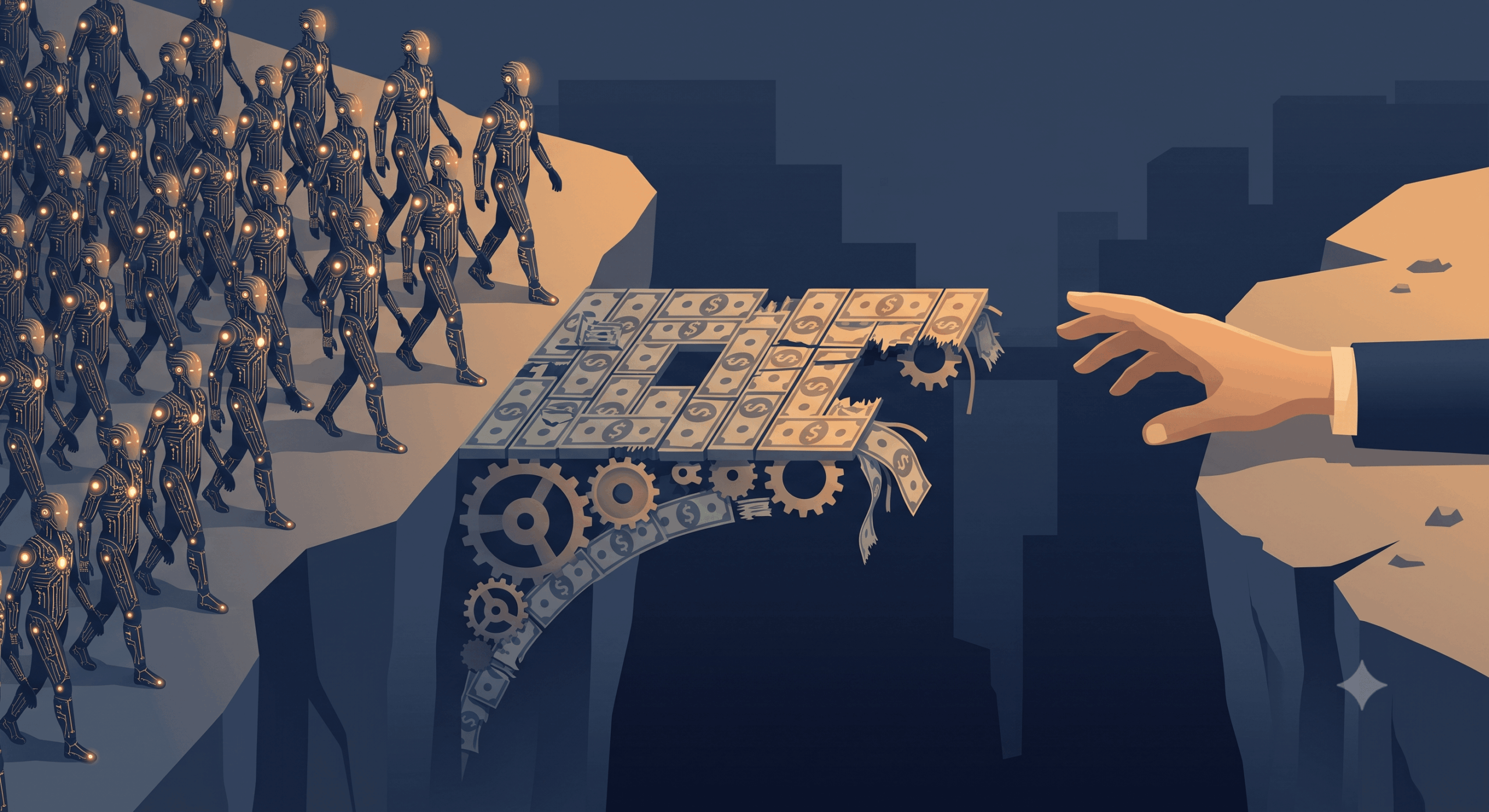
The conversation about AI and early-career work tends to go one direction: what’s being lost. The entry-level tasks that used to build expertise are getting automated away. The tacit knowledge pipeline is eroding. The apprenticeship model is under pressure it wasn’t designed to handle.
All of that is real. New research from IESE Business School models exactly how it happens: when AI substitutes for early-career tasks, novices get matched with worse mentors, best practices diffuse more slowly, and long-run productivity growth takes a hit that doesn’t show up in any near-term dashboard. MIT Technology Review named the problem directly earlier this year. But the conversation almost always stops there, at the loss, without spending much time on what’s simultaneously becoming available to anyone willing to use it.
The conditions for self-directed learning have never been better. That’s not a reassurance. It’s a structural fact worth taking seriously.
The tacit knowledge pipeline was never equally accessible
The traditional apprenticeship model, the version we’re now worried about losing, was never equally accessible. It rewarded proximity. You had to be near the right people, in the right organization, at the right stage of your career. Tacit knowledge transferred to the people who could afford to be in the room where it happened.
That left a significant portion of capable, curious people on the outside of the pipeline entirely. Not because they lacked the ability to develop expertise, but because the mechanism for developing it was gatekept by geography, credentialing, networks, and institutional access.
The disruption of that model is real. It’s also worth being honest that the model being disrupted was always doing something other than just developing talent. It was filtering who got to develop at all.
Self-directed learning now has infrastructure it never had before
The tools available to a self-directed learner today have no real historical precedent. The ability to experiment cheaply, build things without institutional permission, access primary research, connect with practitioners across industries, get real feedback on real work without waiting for a performance review cycle, none of this existed at meaningful scale a decade ago.
AI itself has changed the economics of self-directed learning dramatically. Not because AI replaces the need for expertise, it doesn’t, but because it radically lowers the cost of getting started, of testing ideas, of recovering from mistakes, and of iterating fast enough that the learning accumulates. The most displaced cohort is also the most AI-fluent generation in the workforce, a tension that points toward opportunity as much as it points toward risk.
The novice-to-expert pathway still exists. It’s just less dependent on institutional scaffolding than it used to be. The learner who is genuinely curious, willing to build in the open, and capable of tolerating uncertainty while skills develop is better positioned today than at any prior point.
Curiosity now has more to work with
The thing about curiosity as a professional asset is that its value has always been high but its return on investment depended on what you could do with it. Curious people who lacked access to information, tools, or community didn’t have much to work with. Curiosity without access doesn’t compound. It stalls.
That bottleneck has largely been removed. The same curiosity that might have driven someone to a library in 1995 or a specific graduate program in 2005 can now drive them to build a working prototype, publish their thinking, connect with the practitioners whose work they’ve been following, and iterate in public. That’s a fundamentally different return on the same underlying orientation, and it’s reshaping which future of work skills actually matter.
The question worth asking
None of this resolves the structural problem the research identifies. The MIT TR reality check is clear: the variable isn’t the technology, it’s the intent behind how it gets deployed. Organizations that automate entry-level work without redesigning the learning pathways attached to it will erode their own tacit knowledge base, a cost that will show up just slowly enough that most won’t feel it until it’s difficult to reverse. Rebuilding those pathways is a question organizations are still working out.
But for practitioners and professionals navigating this moment individually, the strategic question is less about what institutions are or aren’t doing and more about whether they’re taking advantage of what’s available.
The career path that used to require proximity to the right people, access to the right institutions, and patience with a structured progression that moved on someone else’s timeline is not the only path anymore. It might not even be the best one for what the current moment actually rewards.
Tacit knowledge still matters, perhaps more than ever. The difference is that the pipeline for building it is no longer confined to institutional proximity. For self-directed learners willing to use the tools available, the surface area for developing genuine expertise has never been wider. Whether that changes what’s possible depends entirely on whether you use it.
About the author : Charles

Charles Costa, MLIS is a researcher, strategist, and founder of Lexora Labs, where he works on AI adoption, knowledge management, and the future of expert